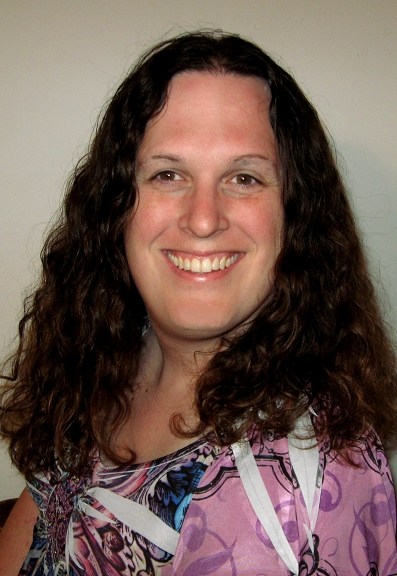
Susan Jane Bigelow writes from a place where speculative fiction, political conviction, and personal experience meet. She has built an unusually varied creative life in Connecticut, working as a librarian and political columnist while establishing herself as a science-fiction and fantasy novelist. Her political writing had begun years earlier with CT Local Politics, which she wrote and operated from 2005 to 2010, before she became a weekly columnist for CT News Junkie, where she wrote about Connecticut politics and issues affecting the state. Her fiction, meanwhile, has developed into something much larger than the single novel she once imagined herself writing. Broken, published in 2011, took six years of drafting, revision, and anxiety to bring into the world. What she expected to be a one-time achievement instead became the beginning of the Extrahumans series, followed by Sky Ranger and The Spark. In May 2013, she was preparing readers for an entirely new universe with The Daughter Star, the first book in a planned trilogy about three sisters. The change was creatively demanding, she explained, because the earlier universe had been growing in her imagination since childhood.
There is a particular generosity to the worlds Bigelow creates. Her science fiction does not simply use extraordinary abilities, dystopias, aliens, or fantastical adventures as spectacle; it uses them to explore character, relationships, politics, gender, and the complicated ways people become themselves. A 2013 review of Broken praised the novel for transforming familiar superhero conventions into something emotionally powerful, with a richly constructed dystopian world and deeply human characters. Her transgender experience also found a place within that imaginative landscape. In the 2012 anthology The Collection: Short Fiction from the Transgender Vanguard, Bigelow contributed “Ramona’s Demons,” a story about Mona, a former demon hunter whose magical abilities have changed following her transition. The anthology, written entirely by transgender, transsexual, and gender-variant authors, went on to receive the 2013 Lambda Literary Award for its category, placing Bigelow within an important emerging generation of trans writers creating their own speculative and literary narratives.
Yet Susan’s transition was not something she describes as a simple literary theme. She transitioned at 31 and recalls being fortunate to have substantial support, including from her workplace. What had been deeply private for her became public through coming out, something she found uncomfortable precisely because of her naturally private personality. She also remembers that, before transitioning, she had very little knowledge of transgender life or visible role models. The friends she found along the way became important models for her, while the growing visibility of transgender women such as Janet Mock and Laverne Cox represented, in her view, a remarkable change. That intersection of private experience and public life seems central to Susan’s work. She could write about Connecticut politics one day and imagined worlds the next, while allowing questions of gender and identity to move naturally through both. Her political voice is not separate from her commitment to transgender equality: she is particularly proud of having written in support of a Connecticut trans-rights bill that passed and was signed into law in 2011. At the same time, she resists reducing her fiction to a single identity or subject. It is that combination of imagination and lived experience, political engagement and escapist wonder, privacy and public voice, that makes Susan Jane Bigelow such a fascinating figure to meet at this moment in her story, when so much of the world she would go on to build was still waiting to be written.

|
| “The Spark” (2012) |
Monika: Today I am happy to introduce Susan Jane Bigelow, an American transgender writer, librarian, political columnist, and author of “Ramona’s Demons,” which appears in Topside Press’s “The Collection: Short Fiction from the Transgender Vanguard.” Hello, Susan!
Susan: Hello, Monika! Thank you for having me.
Monika: Could you tell us a little about yourself?
Susan: Sure. I’m a librarian, a political columnist, and a writer. I live with my wife in the northeastern United States. I’m the author of the Extrahumans series, the Grayline Sisters series, and you can find my writing in QUEERS DIG TIME LORDS as well as the Topside Press COLLECTION.
Monika: How did your writing journey begin?
Susan: I’ve always been a writer, even when I was little. I would make up stories, and my mother would encourage me to write them down. I can’t imagine myself without writing at this point.
Monika: Tell me more about “Ramona’s Demons.” What inspired the story?
Susan: Absolutely. When Topside Press put out the call for stories, I’d been busy reading urban fantasy novels, so I decided I’d write an urban fantasy story starring a transgender protagonist. It’s the story of Ramona, who is assigned to find a missing item that turns out to be a little lost demon kid that she has to protect from those who want to do him harm. She also has to face up to her own past, confront her father, and convince her friend Dori that she isn’t completely full of shit. It was a fun story to write!
Monika: You are also the author of the Extrahumans novels. What are they about?
Susan: That’s a science fiction series about super-powered people living under a fascist, authoritarian government that would like nothing better than to either exploit or be rid of them. But they’re about a lot of other things, as well! I encourage people to go check them out.
Monika: When you create transgender characters in your books, do you draw on any autobiographical elements in their lives or stories?
Susan: Honestly, I don’t, not for the trans characters. Ramona is nothing like me, and neither is Renna Fernandez Silva from FLY INTO FIRE (Extrahumans #2). Dee White from THE SPARK (Extrahumans #3) might be the character who is the most like me, and she’s cis. But as an extra-human, she goes through a lot of the same alienation and struggles with things like “passing” for “normal” as opposed to being “out,” which is very familiar to me. There’s also a lot that I write about names, how identity is formed, and so on in those books.
Monika: Does something like a transgender literature exist?
Susan: I think we’re figuring that out as we go. It’s actually a very exciting time to be a trans writer. There’s a lot of great stuff coming out now from lots of fantastic writers like Imogen Binnie and Everett Maroon. This is a kind of literature that is growing and changing fast!

|
| Eating a cake. |
Monika: How do you view the transgender stories and characters that have appeared in films and books so far?
Susan: I’m not a fan of most of the mainstream stuff, with a few exceptions. I really liked Mrs. Hudson in Elementary (a TV series), for example.
Monika: Some critics argue that contemporary art offers too few opportunities for women to showcase their talents and tell stories that speak to a female audience. Would you agree?
Susan: I would, at least when it comes to mainstream media. I think there are lots of smaller niches where the exciting stuff is happening, but it’s very hard to get the same kind of exposure that stories by and about men tend to get. As a science fiction and fantasy writer I often feel this pretty keenly.
Monika: What does it mean to you to be a transgender writer?
Susan: I have no idea. I’ll let you know if I ever figure this out!
Monika: Are you working on anything new at the moment?
Susan: Always! I just finished work on the second Grayline Sisters book (the first one, THE DAUGHTER STAR, came out in May), and I’m working on another science fiction adventure book about queer women, robots, and all kinds of wacky stuff happening in space. Plus I have some short stories coming out in the near future, so there’s that as well!
Monika: We are seeing more and more talented and prolific transgender writers, from Jan Morris in the United Kingdom and Josephine Emery in Australia to Aleshia Brevard in the USA, alongside a newer wave that includes Julia Serano, Ryka Aoki, Susan Durkin, and Imogen Binnie. Do you think transgender writers have a chance at greater prominence?
Susan: You’ve named some fantastic people! I certainly hope so. These are amazing writers, and they deserve a wider audience!
Monika: More broadly, how do you see the situation of transgender women in American society today?
Susan: Not as bad as it was even five years ago, but there’s still a long way to go. This is especially true for non-white trans women, who still have to face an awful lot of marginalization and risk. We can and must do better.
Monika: How old were you when you transitioned, and how difficult was the process? Did you have support from family and friends, and did it affect your work life?
Susan: I was 31. I had a lot of support, thankfully, and it wasn’t nearly as bad as I thought it would be. My job was great about it.
Monika: At the time of your transition, did you have any transgender role models to look up to? How much did you know about transgender life then?
Susan: I didn’t really know anything! I made some good friends who I used as role models, but I didn’t really see anyone in the media. Now there are some fantastic role models like Janet Mock and Laverne Cox to look up to, which is just awesome.

|
| “Broken” (2011). |
Monika: What was the hardest part of coming out?
Susan: I’m a very private person, usually, and making something that seemed so very private public was uncomfortable, to say the least. I was lucky that I didn’t have to deal with a lot of harassment or hate from people. They were mostly very cool about it, but it was (and still is!) very hard for me to come out to people. I did it, though.
Monika: You have a family of your own. Could you talk about the role love plays in your life?
Susan: I couldn’t get by without my wife, who has been my most constant and passionate supporter, and my best friend. She’s been with me every step of the way, even when it wasn’t easy to do. I owe her a lot, and my life would be immeasurably less without her love.
Monika: Are you active in politics, and do you take part in any lobbying? Can transgender women make a real difference in politics?
Susan: I’m a political columnist for CTNewsJunkie.com, which is a politics and news site in my state of Connecticut. I write about all kinds of things, but one of the columns I was proudest of was one supporting a trans rights bill, which was passed and signed in 2011.
Monika: Do you think we might live to see a transgender woman become President of the United States?
Susan: I’d be very surprised, but wouldn’t it be nice? I think it would be a wonderful symbol of how much society can change over time. I’d certainly like to be around to see the day when it no longer seems like such an extraordinary idea.
Monika: Many transgender women write memoirs. Have you ever considered writing one yourself?
Susan: Ha! I’ve thought about it, but I can’t imagine anyone would want to read it! I suppose there might be a story in there somewhere, even if I’m not convinced it would be particularly exciting. Maybe one day I’ll change my mind and give it a try.
Monika: Based on your own experience, what would you say to transgender women struggling with gender dysphoria?
Susan: Find someone to talk to, and then do what you need to do when you need to do it. And remember, everyone’s experience is different. There isn’t a single timetable or path that works for everybody. Be patient with yourself and try not to compare your journey too closely with someone else’s.
Monika: What are your next steps right now, and where do you see yourself in the next five to seven years?
Susan: I really don’t know. I intend to keep writing and working, and we’ll see! I’ve never been particularly good at predicting where life is going to take me. For now, I’m happy to keep doing the things I enjoy and see what comes along.
Monika: Would you say you are a happy woman today?
Susan: I would. I think there’s something to be said for reaching a point where you can simply enjoy your life and be comfortable with who you are. I have my ups and downs, of course, but overall I’m grateful for where I am today.
Monika: Susan, thank you for this interview.
All the photos: courtesy of Susan Jane Bigelow.
© 2013 - Monika Kowalska

No comments:
Post a Comment