Monday, April 28, 2014

Interview with Leslie Regier

Leslie Regier
 
Leslie Regier is an American transgender woman and the author of Unchaining My Truth: Taking Flight on the Wings of a Dream, published in 2013 by her own business, Violet Angel. Leslie describes herself as a woman with many interests and passions, driven by a desire to learn, experience life, share, and teach. In her autobiography, she recounts her journey of gender transition with honesty, warmth, and a sense of humour, exploring both the lighter moments and the more serious challenges of discovering and expressing her true self. After suppressing her feelings throughout her teens and early twenties, Leslie began exploring her identity as a woman at the age of twenty-eight and was living as a woman by thirty. Fortunately, she received support from her mother, friends, and colleagues, although making decisions about permanent physical changes was among the most difficult parts of her journey.
 
Through her book, she hopes to help others understand the experiences of transgender people, from coming out to family and coworkers to navigating the practicalities of transition. Above all, she wants readers to know that transition is possible, even when it once seems like an unattainable dream. Leslie also shares her thoughts on transgender visibility, changing social attitudes, human rights, and the importance of positive representation in books and films. Although she is not directly involved in politics or lobbying, she believes that living openly and setting a positive example can make a difference. Her story is a reminder of how much we can learn from one another and how sharing our experiences can give others the courage to imagine a different future for themselves.


Friday, April 25, 2014

Interview with Nancy Nangeroni


Nancy Nangeroni is an American transgender activist, educator, and media pioneer who has played a leading role in advancing transgender rights and visibility since the early 1990s. A Boston native raised in Milton, Massachusetts, she began her journey of self-discovery and advocacy after a life-changing motorcycle accident at the age of 27. This event gave her the courage to come out to her family as a transgender woman, which marked the beginning of her lifelong dedication to the transgender community. In the early 1990s, Nangeroni founded the Boston chapter of The Transexual Menace, one of the first direct-action transgender rights groups in the United States. She also became known for her sharp commentary on anti-transgender violence in Boston-area media and for co-editing In Your Face: The Journal of Political Activism, a collection that reflected her passion for justice and visibility.
 
In 1995, she launched GenderTalk Radio, a groundbreaking talk show on WMBR in Cambridge, Massachusetts, focused on transgender issues, history, and activism. Co-hosted with academic and partner Gordene MacKenzie, the show aired weekly for over a decade and earned national recognition, including a GLAAD Media Award in 2000 for "Outstanding LGBT Radio." That same year, Nangeroni helped organize one of the first national protests against anti-transgender violence in the wake of Brandon Teena’s murder, an event that brought together prominent activists such as Leslie Feinberg and Kate Bornstein. In 1998, she co-led the vigil for Rita Hester, a Black transgender woman murdered in Allston, Massachusetts, an event that would inspire the founding of the International Transgender Day of Remembrance (TDOR). She continued to honor Hester’s legacy by documenting the media response and interviewing Hester’s family on GenderTalk. Nangeroni also served as Executive Director of the International Foundation for Gender Education and was Chair of the Steering Committee of the Massachusetts Transgender Political Coalition, where she served for six years and was later named Chair Emeritus. From 2006 to 2008, she co-produced and co-hosted GenderVision, a cable TV program about gender identity and expression. A trained electrical engineer, Nangeroni worked in the field until a spinal injury in 2004 ended that chapter of her career. She continued to focus on activism, education, and media work, becoming a leading voice for transgender equality and representation.


Thursday, April 24, 2014

Interview with Guta Silveira


Guta Silveira is a Brazilian transgender activist, actress, and author of two biographical books, Homens Não Choram (1994) and Transexual: A História de Uma Vida (2005). Born and raised as a boy, Guta recalls recognising her femininity from early childhood, when playing with her mother's makeup and imagining herself in dresses brought her happiness. As she grew older, she struggled to understand her identity and find her place in the world, eventually coming out as gay before realising that she was a transgender woman. At sixteen, she was elected the first Miss Gay in her hometown of São José do Rio Preto, and at eighteen, she became the owner of what was then the town's first gay nightclub, opening its doors to hundreds of people. Her journey towards self-understanding continued until, at the age of twenty-nine, she joined a multidisciplinary medical programme that helped her recognise her identity and pursue gender-affirming surgery.
 
Following her surgery in December 1998, Guta also succeeded in changing her official documents to reflect her name and female sex designation, an achievement she describes as an important milestone in her life. Her professional journey has included working alongside a surgical team, appearing on television, writing books, and performing on stage. In her interview, Guta speaks candidly about her childhood, her difficult relationship with her father, her experiences with the Brazilian media, and the challenges transgender women face when seeking acceptance and respect. She also shares her views on human rights, political participation, love, fashion, and the importance of self-acceptance. Although she does not identify as a conventional activist who participates in demonstrations or raises flags, Guta believes that transgender people can contribute to every area of society and should never be defined solely by their gender identity. Through her books, acting, and personal experiences, she hopes to encourage other transgender women to embrace themselves, defend their ideals, and find happiness without feeling compelled to meet impossible standards of perfection.


Wednesday, April 23, 2014

Interview with Fay Presto


Magic has long been a male-dominated field, but there are those who have defied the odds, breaking barriers with skill, wit, and sheer determination. One such trailblazer is Fay Presto, Britain’s premier female magician, whose career has dazzled audiences for decades. With a signature style of close-up magic and a reputation for transforming any setting into a stage, Fay has entertained royalty, celebrities, and magic enthusiasts alike. From performing for Her Majesty The Queen on five occasions to leaving guests in awe at London's most exclusive venues, Fay Presto has truly made her mark in the world of magic. A Member of The Inner Magic Circle, she is best known for her breathtaking "bottle through the table" illusion, a trick so iconic it was ranked among the 50 greatest magic tricks of all time by Channel 4.
 
But Fay’s journey to becoming a legend of close-up magic was anything but ordinary. Before embracing the world of illusions, she dabbled in atomic energy research, fashion, engineering sales, and even student politics, where she once stood shoulder-to-shoulder with future politicians. However, it was magic that ultimately became her true calling, a career born out of reinvention and resilience. Yet, Fay’s story is not just one of sleight of hand and spectacle; it is also one of perseverance in the face of adversity. As a transgender woman, she encountered barriers within the magic community, even being asked to leave The Magic Circle when she began her transition. However, in 1991, when women were finally welcomed into the prestigious organization, Fay was among the first to join. Since then, she has not only earned the admiration of her peers but also paved the way for future generations of women in magic. 
 
Beyond the stage, Fay has been a dedicated advocate for LGBTQ+ rights and children's charities, using her platform to support and uplift others. Whether performing for Madonna, Sir Elton John, or a room full of eager onlookers at Langan’s Brasserie, where she held a residency for over two decades, her magic remains a testament to the power of wonder and transformation. In this interview, we sit down with the legendary Fay Presto to discuss her remarkable career, the evolution of magic, and the challenges she has faced along the way. Prepare to be inspired by a woman who proves that true magic is not just in the tricks but in the courage to be oneself.
 
Her first 10x8, 1985.
 
Monika: Hello Fay! Welcome to my blog!
Fay: Hello Monika!
Monika: Throughout history, magic has captivated audiences by creating illusions that defy logic and reality. From ancient rituals to modern stage performances, it continues to enchant people worldwide. What is it about magic that makes it such a timeless and essential part of entertainment?
Fay: Magic, my kind of magic, is part of the entertainment industry. People have a fundamental need to be entertained, after air, water, food, and shelter, comes entertainment; be it folk tales, shamanic dancing, or cave paintings that flicker in the firelight. We go out, kill the mammoth, bring it home, skin it and cook it and then gather in the cave behind the fire and tell tales to help us forget the sabre-toothed tiger on the other side of the flames. That is why today we have books, cinema, television, and theatre. We need the entertainment to distract us from the horrors of everyday life.
Monika: For centuries, magicians were often linked to the devil and the occult, facing suspicion and even persecution. It wasn’t until the 18th century that magic emerged as a respected craft, gaining widespread popularity in the 19th and 20th centuries. How would you describe the role and perception of magic in the 21st century?
Fay: Until recently in England, magic has had a status a little below that of a tax inspector singing off-key. It is enjoying a little renaissance at the moment. There has been a rise in the popularity of a clutch of ‘David Blain’ tattooed young men. English people are not very good at releasing their inner child, they won’t go to a theme park without taking the children along, and there is a long-standing feeling that ‘one grows out of believing in magic’. If you can construct a scenario where they can let go, they have a wonderful time. 
 
A publicity shot from the late eighties.
 
Monika: You’ve had the remarkable honor of performing for Her Majesty The Queen on six separate occasions. How do members of the royal family react to your magic, do they allow themselves to be fully captivated, or do they try to uncover the secrets behind the illusions?
Fay: It turns out I am quite good at creating a situation where English people can let go and give their inner child a moment out in the light. If you remember that even elevated and famous people are just that, people, then we can all have some fun. As a jester I am allowed to metaphorically bop the Queen over the head with the pig's bladder... so long as it is funny.
Monika: Channel 4 ranked your Bottle Thru Table trick as the 37th Greatest Magic Trick of All Time. What’s your creative process when it comes to inventing new illusions?
Fay: Having recreated myself to ‘get the hair all lying along the grain’, I have created very little. I suppose I did create a ‘style’ of performance that did not exist before I came along and saw the potential. I have taken pretty standard effects and powered them up a bit. 
Bottle through table; a rather odd thing to be known for, pushing a bottle through a table, is a case in point. I saw the trick on the shelf of a magic dealer at a magic convention in San Diego.
I got it back to my hotel room, read the instructions, and realized it was quite unperformable in the working environment I operated in.  It sat in the ‘magic cupboard’ for about three months, until one day I realized there was a ‘handling’ that could and did work for me.
The rest is history, as they say.  Last night in front of five hundred people, as part of my stage act in a Theatre near London, I pushed a bottle through a young member of the audience lying on a table ... and the table. The trick was never intended for that kind of performance, but it was very well received, and that potential was there, locked inside it since it had been invented. There is a little lesson there for many of us I think.
 
Queens of Magic 2010 Blackpool pleasure beach.
 
Monika: You were the focus of the BBC2 documentary Illusions of Grandeur. How did it feel to have your life and work captured on film, and what was the experience like behind the scenes?
Fay: "Illusions of Grandeur" was a documentary in the BBC ’40 Minutes’ Series.  I did not want to do it and agonized about it for several years.  I really believe our ‘gender’ is our own affair, but if it had to be done, and I made sure I trusted the team implicitly, it was a worthwhile thing to do. There were some moments of the film I was very proud of.
Monika: When you were going through your transition, were there any transgender role models who inspired or guided you along the way?
Fay: No. I was allowed to believe I was the only person in the world with these ‘disgusting desires.’
Monika: Looking back on your coming out journey, what was the most challenging part of the experience?
Fay: When I was eighteen I was caught ‘inappropriately dressed’ riding my motor scooter around Abingdon, and found myself in court. I was sentenced to two years in prison or electro-aversion therapy. I managed to talk my way out of either, but the cost was high and I had to ‘bury’ myself for ten years. When I did emerge into the light it was a long journey back. I went to my parents' home and explained things as best as I could. My mother said we love you dearly, but perhaps it would be better if you did not come home in the daylight.  I won them over in the end, but that one phrase still hurts and I can recall every moment of the conversation even today.
Monika: How do you see the current status of transgender women in British society, have there been significant improvements, or do major challenges remain?
Fay: I have a big problem.  My problem is with the word ‘Stealth.’ It implies something underhand and deceitful. If it is at all possible I think living without exposure is probably the best place to be, and should not be seen as aberrant. The jury is still out on this and others should decide, be allowed to decide, without such slanted words coloring their decision. 
6
What does magic do; A sick bay in a Theme Park.
I believe that there is a deeply and genetically ingrained revulsion against us in many men. This increases the casual everyday prejudice against us and is probably best dealt with by not proclaiming it.  There is a sort of wicked pleasure, especially when we are new, attractive, and yes, a little excited about our situation, in the ‘shock horror expose’ of hearing people say ‘you would never know!’
It is not unlike the quick fix of ego in revealing how a magic trick is done.  As with revelations about the method behind a trick, you realize it is actually better to keep the secret. The long-term comfort of anonymity is a better triumph to have. Once the genie is out of the bottle, there is no putting it back, we should be encouraged to think about this very carefully, and do not trust any journalist anywhere… ever. Do not trust any journalist anywhere… ever. Do not trust any journalist anywhere… ever. They will destroy your life.
Monika: So what do we need? 
Fay: We are, I think our own worst enemy on this. We need role models, Oh God, do we need role models, but we should also really interrogate ourselves about the in/out debate and supply balanced guidance to help people decide for themselves. With the huge strides being made with puberty blockers and so much better prognoses and outcomes, this needs addressing more than ever.
The journey we are on is similar to the gay community. We may be on parallel tracks, but our ultimate destination is different. We have both been fighting for protection from persecution, but the gay community is fighting for the right to be visible but treated as equal by society. I think some, maybe most of us, are fighting for the right to be invisible and treated as equal by society.
I am not sure about the catch-all GLBT handle. Gay, Lesbian, and Bisexual are definitions of sexuality; Transexualism is a statement of gender. Sure there are Gay Transexuals, Lesbian Transexuals, and Bisexual Transexuals, but where do the Heterosexual transsexuals go in all of this.
7
What does magic do; A sick bay in a theme park
20 minutes later.
Monika: Do you believe transgender rights could become the next major frontier in the fight for human rights?
Fay: A frontier, for sure, but not the frontier, there is no end to the ghastliness of the treatment mankind, (I use the term advisedly) can visit upon mankind, but we are definitely a frontier. The way a society treats those on the fringes of that society is an important barometer of the health of that society. We all need to play our part in nurturing the society we all live into better health. 
Monika: Are you involved in politics or participate in any lobbying campaigns? In your opinion, can transgender women make a significant impact in the political arena?
Fay: Not so much these days. I was the president of a college Students Union and stood shoulder to shoulder with Jack Straw, then The NUS (National Union of Students) President and now an ex-Home Secretary, on the steps of the Endsleigh Street NUS H.Q. We were defending it against a takeover sit-in (the heady political days of the late 1960s) by some radical students from Oxford.
I was involved with an organization called ‘Shaft’, yes really; it stood for Self Help Association For Transexuals and was run by an ex-military type called Judy cousins.
We transmuted it into TAG, the Transsexuals Action Group and we marched, lobbied parliament, and met with Alex Carlisle, now Lord Carlisle, who has done so much for us. We ran a self-help group in Islington, ‘personned’ a switchboard offering completely unqualified telephone support for, etc. I was once asked to be a prospective parliamentary candidate.  I am currently fighting a small skirmish against the casual sexism rampant in the magic community, but I don’t see myself as a ‘political animal’. 
Monika: How important is love in your life, and how has it shaped your journey?
Fay: I wish!
Monika: How do you feel about fashion? What types of outfits do you typically wear, and are there any particular designs, colors, or trends you gravitate towards?
Fay: My performance clothes are high glamour, or as high as a ‘superannuated granny woman’ can aspire to. I like smart functional clothes the rest of the time, and this is being written in jeans and a sweatshirt.

A table in Langans this year.

Monika: Many transgender women have written memoirs about their journeys. Have you ever considered writing a book to share your own story?
Fay: I have had quite enough rejection for one life. If someone came to me with a concrete proposal and a fairly guaranteed outcome I might consider it, but I am not about to commit to hours of work only to be told ‘There is no requirement for this’.
Monika: Are you currently working on any exciting new projects?
Fay: Trying to stay solvent.
Monika: What advice would you give to transgender women who are considering a career in entertainment?
Fay: Think. Think very, very carefully, and only proceed if you are really good at accepting rejection and disappointment. There are very few who can make even a modest income from this industry, and it is one of the most reactionary industries there is. I have been told I cannot get booked on a cruise liner because ‘they will not know which toilets I will use. Think about it and… Do not trust any journalist anywhere…ever. Do not trust any journalist anywhere… ever. Do not trust any journalist anywhere…ever. They will destroy your life.
Monika: Fay, thank you for the interview!


All the photos: courtesy of Fay P resto.
© 2014 - Monika Kowalska


Tuesday, April 22, 2014

Interview with Melissa Sklarz

Melissa Sklarz is an American transgender activist and Democratic political organizer from New York City. She transitioned in the early 1990s and later became a peer counselor with the Gender Identity Project at Manhattan's LGBT Community Center. Her work there exposed her to the lack of resources available to transgender people and led her into political activism. In September 1999, Melissa was elected a judicial delegate in New York's 66th Assembly District, becoming the first openly transgender person elected to political office in New York State. She subsequently became involved with the New York Association for Gender Rights Advocacy (NYAGRA) and the New York Trans Rights Organization (NYTRO), serving as NYTRO's director and advocating for transgender-inclusive legislation. Sklarz participated in campaigns surrounding the Sexual Orientation Non-Discrimination Act (SONDA) and the Gender Expression Non-Discrimination Act (GENDA), advocating for protections based on gender identity and expression. She also worked with elected officials and community organizations on New York City's transgender-rights legislation.
 
Her political activities extended into the Democratic Party and broader LGBT movement. She held leadership positions in the Stonewall Democratic Club of New York City and was its president by 2013. She also served as a board co-chair of the Empire State Pride Agenda and the National Stonewall Democrats. She became the first transgender delegate from New York to the Democratic National Convention. Melissa advocated for transgender people's access to accurate identification documents and testified about New York City's birth-certificate requirements, arguing that restrictive rules created unnecessary barriers for transgender people. She also publicly discussed her own transition and her family's history, tracing the Sklarz family from Poland to Munich and eventually to New York City, where she said her family arrived in the late 1850s. Alongside her activism, Melissa worked in the financial sector, including a 19-year career with the Actors Federal Credit Union, where she worked in financial services and served as Director of Collections. She has spent two decades combining transgender advocacy, political organizing, community leadership and Democratic Party activism, becoming a significant figure in the early history of transgender political representation in New York.


Sunday, April 20, 2014

Interview with Johanna Kamermans


Johanna Kamermans (born 1938) is a writer, translator, and former striptease dancer from the Netherlands. With a career spanning nearly 15 years, she worked in prestigious cabarets across Germany, Belgium, and Luxembourg under the stage name Gina de Senfal (and briefly Gigi Deloran). Known for her captivating performances, Johanna became a prominent figure in the vibrant nightlife scene of the 1960s, 1970s, and 1980s, where she made a name for herself with her sophisticated yet seductive style. Her performances were defined by her elegant choice of attire, luxurious leather, silk, fur, and towering 14 cm high heels, which became an inseparable part of her persona. Beyond her career on stage, Johanna is also a prolific writer, having authored over 10 books of various genres. Among her most notable works is Schlauchgelüste (2012), an autobiographical novel that explores her unique journey as a performer and the complexities of her life as a transgender woman. Through her writings, Johanna offers a glimpse into the bygone era of cabaret, capturing the spirit of a time when the world of nightlife was filled with both glamour and freedom.  
 
Now, at 76 years old, Johanna reflects with gratitude on her remarkable life. While the vibrant cabaret scene of her youth has faded, she cherishes the experiences that defined her and the women and men who were part of her journey. Johanna’s latest project is a novel recounting her time as a stage dancer and her relationships with various men. She has also created the Transmythos website to preserve the memory of this unforgettable era. With a philosophy of embracing one's true self, "I am what I am," Johanna remains an inspiring figure, continually shaping her narrative with grace and authenticity. Her legacy is a testament to the resilience and evolution of transgender women in the entertainment world and beyond.


Thursday, April 17, 2014

Interview with Jennifer Cohen-Taylor


Jennifer Cohen-Taylor is a transgender woman, video blogger, and LGBT rights activist who documents her transition on YouTube, sharing her experiences and connecting with others through honest, heartfelt conversations. Having known from the age of five that she was a girl, Jennifer grew up facing the painful consequences of a world that refused to recognise her identity. One of her earliest memories is of being separated from the girls she played with at school, an experience that left her feeling isolated and deeply affected her relationships for many years. It took her until the age of forty-four to come out and begin living openly as Jennifer, embracing the woman she had always known herself to be. In her videos, she speaks candidly about her transition, the changes brought about by hormone therapy, and the freedom she has found in finally being herself. She is also a passionate advocate for transgender and gay rights, having received activist training from the Human Rights Campaign and the New Organizers Institute and participated in grassroots campaigns for transgender rights in Miami.

Living in Nashville with her partner, Lynna Lopez, Jennifer is enthusiastic about fashion, personal expression, and the growing visibility of transgender people in society. She admires ordinary people who face life's challenges with courage and determination, seeing their personal struggles and achievements as a source of inspiration. In our interview, Jennifer reflects on her childhood, the difficulties of growing up without understanding or support, the importance of self-acceptance, and her hopes of becoming a stronger voice for the transgender community. She also shares her views on activism, transgender representation, beauty pageants, and the courage required to live authentically. Above all, her story is one of rediscovering happiness after decades of hiding, and of celebrating the freedom to live as the woman she has always known herself to be.


Wednesday, April 16, 2014

Interview with Rachel Love


Rachel Love is a radio host, coach, intuitive instructor, author, and human rights activist from the United States. Through her books, radio appearances, and public engagements, she shares her experiences as a transgender woman and reflects on the challenges, lessons, and discoveries that have shaped her life. Her memoir, Things My Mother Should Have Told Me Before I Had My Manhood Removed (2013), explores her journey through transition and the realities she encountered along the way. She is also the author of The Day God Died (2013), a deeply personal account of her childhood, religious upbringing, and complicated relationship with her family and faith. Having faced rejection, discrimination, and painful misunderstandings from those around her, Rachel believes in the importance of honesty, understanding, and sharing personal experiences to help others navigate their own journeys. Her activism has led her into local politics, where she ran for mayor of a small city in Arkansas, and she continues to advocate for equality and greater visibility for transgender people. Beyond her work as an author and activist, Rachel enjoys shopping, travelling, fashion, and comedy, and has found love and companionship with a special woman in her life.
 
In our interview, Rachel talks openly about her transition at the age of forty-three, the difficulties she encountered without family support or transgender role models, the lessons she learned through writing, and her hopes for the future of transgender rights. She also shares thoughtful advice for transgender women struggling with gender dysphoria, emphasising the importance of self-understanding, professional guidance, and recognising that transition is only one part of a much larger journey towards becoming oneself. Rachel's story also highlights the importance of having access to truthful information about transition, rather than relying on reassuring words that may not reflect the realities of the experience. She speaks candidly about the need for transgender women to have a stronger voice within the wider LGBT community and to be represented in political discussions that affect their lives. Through her writing and advocacy, Rachel hopes to help others find the strength to understand themselves, overcome obstacles, and build lives shaped by their own values, dreams, and capacity for love.


Tuesday, April 15, 2014

Interview with Laura Calvo


Laura Calvo is an American transgender activist and politician from Oregon, the first transgender woman elected to the Democratic National Committee, former Treasurer of the Democratic Party of Oregon, and a longtime advocate for LGBTQ+ equality and social justice. A former paramedic and sheriff’s deputy, Laura became involved in political activism in the 1970s, helping Harvey Milk’s campaign in San Francisco. After experiencing employment discrimination because of her transgender identity, she turned her personal struggle into a commitment to political change. She played an important role in efforts to pass Oregon’s Equality Act and Family Fairness Act and served as Vice-Chair of the Democratic National Committee’s LGBT Caucus. Her contributions to the community earned her the 2008 Spirit of Pride Award from Pride Northwest and the 2010 Trinity Award from the International Foundation for Gender Education. In 2013, she made history by becoming the first transgender woman elected to the Democratic National Committee.
 
In our interview, Laura speaks candidly about how losing her law-enforcement career after being involuntarily outed in 1995 becomes a turning point in her life. In 2003, she testifies at a legislative hearing on employment discrimination, transforming her personal pain into a commitment to political change. She also reflects on the importance of solidarity, emphasizing that transgender people and their allies build on the work of those who came before them, and that living with dignity and integrity can itself be a powerful form of activism. Beyond politics, Laura offers a compassionate message to transgender people struggling with gender dysphoria: to take care of themselves, be forgiving of themselves and others, and continue making room for the things that bring them joy.


Monday, April 14, 2014

Interview with Amy Brosnahan

Amy Brosnahan

Amy Brosnahan is a young transgender woman from Auckland, New Zealand, a finalist in the Battle of the Babes beauty pageant, and an aspiring model with big dreams for her future. At just 18, Amy is already determined to chase her ambitions, from walking the runway and dreaming of becoming a Victoria’s Secret Angel to speaking out for transgender rights and supporting younger transgender people. Open about both the challenges she has faced and the strength she has found within herself, she hopes to use her experiences to help create better support for transgender youth and their families in New Zealand. Sociable, confident and unapologetically herself, Amy believes in staying true to who you are, pursuing your dreams and never allowing discrimination to make you lose yourself. In our conversation, she talks about beauty pageants, modeling, her role models, coming out, family, love, transgender rights, and her hopes for the future.


Sunday, April 13, 2014

Interview with Carys Massarella

 
Carys Massarella, MD, FRCPC, is a pioneering Canadian physician, transgender woman and advocate for better transgender healthcare. A proud Sudbury native and graduate of the University of Western Ontario, she is an emergency medicine physician and practises at St. Joseph’s Healthcare in Hamilton while serving as Lead Physician of the Transcare Program at Quest Community Health Centre in St. Catharines. She is also a member of the faculty at McMaster University and has become one of Ontario’s most prominent voices for a more respectful, non-pathologizing approach to transgender healthcare. Carys knew from childhood that she was transgender, but spent many years trying to live as a man, building what from the outside appeared to be a successful conventional life. She eventually began her transition in her forties and came out publicly at work, where she found far more support than she had feared. Her own experience gave particular force to her belief that being transgender should not be treated as a disorder and that people should be able to access appropriate medical care without unnecessary barriers or assumptions. 
 
Carys has already established herself as an influential educator and public speaker on transgender issues. She has given TEDx talks addressing transgender identity, equality and the damaging “narrative of deception,” and was involved in research examining the experiences of transgender people within Ontario’s healthcare system. Her approach combines her personal experience as a trans woman with her authority as a physician, allowing her to challenge misconceptions from both inside and outside the medical profession. In our conversation, Carys speaks openly about her transition, the support she received from colleagues, her work with transgender patients and young people, the importance of access to appropriate healthcare, and her hopes for greater acceptance. She also reveals the woman behind the physician: a mother who treasures her children, a lover of elegant designer clothes and especially boots, and a woman who believes that transgender people should be recognized for their accomplishments rather than judged primarily on whether they conform to conventional ideas of beauty or femininity.


Saturday, April 12, 2014

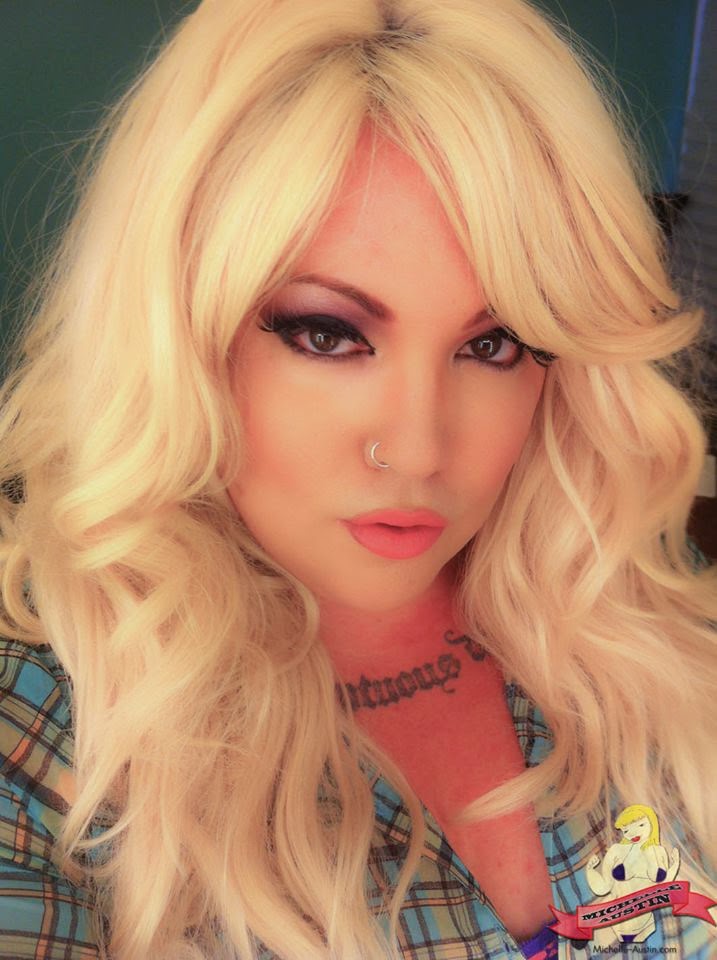
Interview with Michelle Austin


Michelle Austin is a trailblazing transgender actress, producer, director, and video editor whose impact on the adult entertainment industry extends far beyond the screen. A fierce advocate for representation and visibility, she has played a pivotal role in breaking barriers for transgender individuals in media. Her exceptional talent and dedication earned her the prestigious 2013 Tranny Award for Voluptuous Model, a testament to her influence and presence in the industry. More than just a performer, Michelle is a dynamic businesswoman who has carved out her own space as a producer and director, shaping narratives and redefining standards within her field. Her entrepreneurial spirit and creative vision have established her as a force to be reckoned with. Beyond entertainment, she leverages her platform to champion transgender rights, fostering empowerment and inclusion within the community. Bold, ambitious, and unapologetically herself, Michelle Austin continues to leave an indelible mark on the industry and beyond.


Friday, April 11, 2014

Interview with Jessie Jacobson

Jessie Jacobson

Jessie Jacobson is an inspirational American woman who has lived in New York, Los Angeles, and London, and whose personal journey and professional work have placed her at the intersection of transgender experience, psychotherapy, education, and advocacy. A transgender woman herself, Jessie transitioned later in life after knowing from childhood that she identified as female, and she has described her transition as difficult but ultimately deeply fulfilling. Jessie began her professional training in 2002 at the Los Angeles Gay & Lesbian Center, where she became the first transsexual mental health clinician employed by the organization and helped establish its first transwomen’s therapy group. After several years at the Center, she moved into private practice, increasingly specializing in transgender and gender-variant clients while remaining open to people across the LGBT and non-LGBT spectrum. She also became involved in teaching and lecturing, including graduate-level courses in Human Sexuality, and was active in educating psychological, psychiatric, and medical professionals about transgender issues.

With a master's degree in Clinical Psychology from Antioch University Los Angeles and training in its pioneering LGBT specialization, Jessie brought both professional knowledge and lived experience to her work. Her therapeutic approach was eclectic rather than tied to a single school of psychotherapy, drawing when appropriate from cognitive-behavioural, psychodynamic, family-systems, humanistic, transpersonal, narrative, and other approaches. She believed particularly strongly in the importance of understanding the social pressures placed upon transgender and gender-variant people rather than treating their identities themselves as the problem. Jessie also brought an unusually personal perspective to her profession. Having experienced transition herself, being married to another trans woman, and having worked with hundreds of transgender clients, she understood the therapeutic relationship from both sides. She saw coming out, finding supportive allies, developing self-acceptance, and avoiding isolation as central issues for many people navigating gender identity and transition. Her advice to transgender people was characteristically direct: embrace who you know yourself to be, seek out others who understand your experience, and do not be afraid to ask for professional help when it can make the journey easier.


Thursday, April 10, 2014

Interview with Sally Goldner


Sally Goldner is a trailblazing Australian advocate, performer, and changemaker whose vibrant career spans community leadership, radio broadcasting, and the performing arts. With decades of activism under her belt, she served as Executive Director of TransGender Victoria and held key roles in Bisexual Alliance Victoria and the Victorian Gay and Lesbian Rights Lobby. In 2011, The Age named her one of Melbourne’s Top 100 Creative and Influential People, a recognition that reflects both her tireless advocacy and creative spirit. Sally’s voice has resonated through the airwaves for years as the host of Out of the Pan on 3CR 855 AM, where she explores pansexual issues with empathy, insight, and curiosity. 
 
She’s also known for her unique presence as a drummer, singer, and stand-up comic, weaving humor and truth into her performances. Her personal journey has been documented in the film Sally’s Story, and her influence continues to shape conversations around gender diversity, inclusion, and equality in Australia. What sets Sally apart is her ability to bridge the personal and political with a rare blend of authenticity and compassion. Whether she’s mentoring the next generation of trans advocates, challenging outdated norms, or simply listening with her whole heart, she leads by example. Her work reminds us that advocacy is not just about laws and policies, but also about human connection, healing, and hope. I had the pleasure of speaking with Sally about her life, her art, and the state of transgender rights in Australia. Our conversation, rich with warmth, wit, and wisdom, begins here.


Wednesday, April 9, 2014

Interview with Andie Davidson


Andie Davidson is a British writer, poet, musician, blogger and publisher from the south coast of England whose transition in her fifties became the catalyst for an unusually rich period of creative work. She began writing seriously after discovering she was transgender, using poetry to explore self-discovery, identity, relationships and the often complicated reactions of those around her. Her first collection, Realisations, was published by her own Bramley Press in 2012 and was subsequently longlisted for the 2013 Polari First Book Prize. Andie also became known through her blog Andie's Place, where she documented her transition week by week, and through her work in the poetry community. She was one of the editors of the Brighton Stanza Poets Anthology 2013, which Bramley Press published, and she performed her poetry at venues including Polari and Brighton Pride. A keen amateur musician, she played trumpet in local wind bands, while her writing and public speaking increasingly became ways of sharing her experience and challenging narrow ideas about transgender lives.

Her own transition began after she discovered, at 55, that being transgender was distinct from sexual orientation and that there was a name for the feelings she had carried since childhood. She found support through a Brighton transgender support group and from several close friends, while also facing the painful loss of her marriage and relationship with her daughter. By Easter 2012, she had publicly told the musicians with whom she regularly performed that she would no longer be living as a man. Andie has combined transition with creativity. In Realisations, she transformed the experience of discovering her identity into intensely personal poetry, while her blog offered an honest account of the practical and emotional journey of becoming herself. Her work also earned recognition beyond the transgender community through its inclusion on the 2013 Polari First Book Prize longlist.


Tuesday, April 8, 2014

Interview with Riah Roe


Riah Roe is an American transgender woman, activist and advocate whose early work helped make transgender issues more visible in the Fargo-Moorhead community and beyond. A graduate of Concordia College in Moorhead, Minnesota, Riah studied Psychology and Sociology with a minor in Women’s Studies, focusing particularly on gender and sexuality. At Concordia, she became one of the college’s first openly transgender students and spoke publicly about the need for transgender-inclusive policies, particularly concerning housing, bathrooms, classroom language and other aspects of campus life. She also wrote about transgender inclusion for The Concordian, challenging colleges to recognize and respond to the needs of transgender students. After coming out and beginning her transition, Riah used her own experiences to connect with other transgender people and to advocate for a more inclusive community. In the Fargo-Moorhead area, she became involved with the Pride Collective and Community Center and Tri-State Transgender, helping with the development of a transgender resource guide.
 
She also became involved in the wider North Dakota LGBTQ community, and in 2013 testified before the North Dakota Senate Judiciary Committee in support of Senate Bill 2252, an LGBT nondiscrimination bill. In her testimony, she described the discrimination she had experienced after coming out as transgender while working as a speech and debate coach. Riah has also spoken openly about the people and ideas that influenced her journey. Among them is writer and activist Kate Bornstein, whom she first encountered at a conference in 2009 and later met through a conference co-organized by Concordia College and North Dakota State University. Bornstein’s Gender Outlaw became one of the catalysts for Riah’s own transition, while local transgender activists provided her with an important sense of community and mentorship.


Monday, April 7, 2014

Interview with Robyn Alice McCutcheon

Robyn McCutcheon
 
Robyn Ann Jane Alice McCutcheon is an American transgender woman whose remarkable career has taken her from the world of NASA and the Hubble Space Telescope to the U.S. Foreign Service. A diplomat, historian and former engineer, Robyn has served at U.S. embassies in Russia, Uzbekistan and Romania, working on subjects ranging from international relations and science diplomacy to nuclear issues. Before joining the Department of State, she spent some 25 years working on NASA projects, including the Hubble Space Telescope, and she has also published extensively on the history of Soviet and Russian science. She holds a degree from the University of Virginia as well as master’s degrees in astronomy from Yale University and Russian area studies from Georgetown University. Robyn’s personal story is every bit as extraordinary as her professional one. In 2010-11, while serving at the U.S. Embassy in Bucharest, Romania, she began her gender transition and became the first U.S. Foreign Service officer to transition openly while serving at an overseas post. Her transition was carefully coordinated with colleagues at the embassy and in Washington, and when it was announced in November 2011, she received an overwhelmingly supportive response from both American and Romanian staff. Two days later, she made her public appearance as a woman at the embassy’s Marine Ball.
 
Her courage soon made her a role model for other transgender people in the U.S. foreign affairs community. In 2012, GLIFAA, the organization representing LGBT people and allies in U.S. foreign affairs agencies, honored Robyn with an Equality Award for her personal and professional courage and her pioneering role in transgender rights. In her response, she reflected on the courage required to transition and described how proud she felt to serve her country. Robyn has also used her position to advocate for transgender people far beyond her own workplace. While serving as GLIFAA’s president, she worked to make transgender issues a more visible part of the organization’s international human-rights work. She was the principal author of an instruction sent to U.S. diplomatic and consular posts around the world encouraging them to include transgender issues in their reporting, contacts with foreign governments and outreach to LGBT communities. She has also spoken publicly about the lives of transgender people in Romania and Moldova, where she developed close friendships within the local trans communities.


Sunday, April 6, 2014

Interview with Johanna E.

Johanna E. is a vibrant and multi-talented Austrian woman whose journey has captivated audiences across German-speaking Europe. Known for her appearance on the acclaimed reality TV show Transgender – Mein Weg in den richtigen Körper, Johanna brought authenticity, wit, and depth to the screen, using her platform to raise awareness about transgender experiences. Beyond television, she wears many hats: stewardess, yoga instructor, storyteller, and spiritual guide. Born with a strong sense of instinct and ambition, Johanna made the bold decision to share her transition story on national television, turning what could have been a private journey into a powerful statement of visibility. Though the reality TV spotlight came with its challenges, Johanna remains deeply grateful for the opportunity to inspire others and connect with the trans community. 

Professionally, Johanna splits her time between the skies, working part-time as a flight attendant, and the yoga mat, where she teaches with a unique blend of healing energy and shamanistic insight. She also runs the platform healingYOGAvienna.com, and is currently working on her first book, GleichMut, a cleverly titled work that explores both equality (Gleich) and courage (Mut), and delves into the emotional and spiritual lessons of her life. With her unapologetically honest voice, Johanna challenges stereotypical narratives often imposed on transgender individuals. She advocates for self-love, conscious living, and finding empowerment in one’s own story. Whether she’s flying at 35,000 feet, teaching a sun salutation in Vienna, or writing heartwarming children's stories, Johanna continues to be a beacon of strength, resilience, and joyful rebellion.


Saturday, April 5, 2014

Interview with Julie Nemecek


Rev. Dr. Julie Nemecek is one of Michigan’s leading voices on transgender issues, an educator, ordained Baptist minister and longtime activist. Julie served as senior pastor of three churches for more than 20 years before moving into higher education, eventually reaching the rank of associate professor at Spring Arbor University and Lansing Community College. She retired from teaching in 2013, but continues to speak at colleges, churches and LGBT events, as well as providing training and consulting services. Julie became a national figure in 2007 after Spring Arbor University dismissed her following her decision to transition. Her case attracted extensive media attention and made her one of the more visible transgender people in America at a time when transgender stories were still rarely represented in mainstream public life. For Julie, however, becoming visible was never simply about telling her own story. Rather than retreat from public life after losing her position, she turned her experience into advocacy and began using her voice to challenge discrimination and encourage greater understanding of transgender people. She became co-executive director of Michigan Equality and has served on the national boards of Soulforce and PFLAG. She is also an advisory board member of Trans Youth Family Allies and an honorary board member of Inclusive Justice Michigan.
 
For Julie, faith has never been something she needed to leave behind in order to become herself. As a lifelong Christian and ordained minister, she has spoken about her transgender identity as part of the diversity of God's creation and has worked to show that Christianity can be a source of acceptance rather than rejection for transgender people. Her own experience of coming out also strengthened her relationship with her wife, Joanne, and deepened rather than diminished her faith. Her story therefore reaches beyond the question of transition itself, touching on the possibility of reconciling one's identity, spiritual beliefs, family life and public work. Julie and Joanne have been married for more than four decades and have three sons, four grandsons and a granddaughter. Her life has included a remarkable variety of experiences: she has delivered a baby, climbed a mountain, gone spelunking, parachuted from a plane, cooked a 12-course dinner, shot a 78 in golf, travelled internationally and visited 48 U.S. states. Behind the minister, educator and activist is clearly a woman who has approached life with considerable curiosity, courage and a willingness to try almost anything. It is a pleasure to welcome Rev. Dr. Julie Nemecek to The Heroines of My Life.


Friday, April 4, 2014

Interview with Maki Gingoyon

 
Maki Gingoyon, also known as Maki Eve Mercedes, entered the world of beauty pageants almost by accident. Being a beauty queen had never been her childhood dream, yet in 2010, at a time when she was looking for a way to support herself and her transition, pageants opened an unexpected door. What began with small village competitions gradually carried her to major transgender pageants in Cebu and Bohol, where she collected titles and discovered something deeper than the glamour of a crown. Her defining moment came at Queen of Cebu 2010. Among 21 candidates and in front of more than a thousand spectators, Maki stepped onto the stage already feeling victorious. With former Miss Universe Margie Moran among the judges, she gave the performance her all, eventually taking the crown. For Maki, however, the most powerful thought at that moment was not the applause or the title, but her mother, who had been too afraid to watch from the audience. Her mother’s eventual acceptance became one of the most meaningful parts of her journey. By 2013, Maki had reached the national television stage as one of the finalists of Super Sireyna, a landmark transgender beauty competition broadcast as part of a popular Philippine noontime show. She saw the experience as much more than a contest. It gave her an opportunity to speak to the Filipino public about transgender women, their abilities, and their place in the community.
 
Away from the pageant stage, Maki’s life has been shaped by resilience, independence, creativity, and love. She studied psychology before family circumstances led her to leave college and work in a call center, a job that helped her support herself and her transition. She also discovered a passion for theater, performing since high school and taking on Calpernia Addams’s Vagina Monologue. Alongside her boyfriend, she became involved in transgender dating websites, seeing the work as a personal advocacy and a way to create decent spaces for transgender women. Maki speaks openly about the insecurities that can accompany being a transgender woman, but she also understands the power of confidence, communication, and the ability to speak one’s mind. Her beauty queen experience taught her that a crown can carry responsibility: the responsibility to inspire, encourage, and challenge others to become the best versions of themselves. For Maki, beauty is ultimately about far more than appearance. It is about finding the courage to stand on a stage, discovering one’s voice, embracing love, and using that voice to make a difference. And that journey, from an unexpected pageant contestant to a woman determined to inspire her community, gives us plenty to ask her about.


Thursday, April 3, 2014

Interview with Kenna Henderson

 
Born in 1941, Kenna Henderson knew by the age of six that she was transgender, yet carried that knowledge quietly for more than five decades, growing up without relatable examples or anyone with whom she could share what she was feeling. The arrival of the internet in 1994 finally gave her a window into a world she had never known existed, and from there began a long, careful process of understanding herself. A writer, ghostwriter, editor, humor author, and songwriter, Kenna eventually turned that deeply personal journey into “I’m Not The Man I Used To Be,” published in 2012. The book grew out of nearly three years of journaling and documenting her own “real-life test,” transforming private reflection into something that could offer encouragement to others. For Kenna, writing became cathartic, but its greatest reward was knowing that her story might help someone else.
 
Her transition unfolded gradually, with her coming out to her wife in 1995, her daughter in 2008, her son in 2013, and others afterward. She describes herself as cautious and deeply self-analytical, someone who needed time to work through every logical argument before finally listening to what her heart was telling her. Fortunately, the people closest to her responded with the support she had hoped for, allowing her to discover that becoming more fully herself did not mean losing the people she loved. Although Kenna does not consider herself an activist, she has found her own way of contributing. Through mentoring young transgender people, speaking to groups, moderating an online support forum, writing articles, and maintaining the Transgender Truth Facebook page, she has chosen visibility and personal example as her form of outreach. Her message is simple but powerful: people should not have to suffer in silence, and no one else can define who they truly are. From childhood secrecy to becoming an author and mentor, her story is ultimately about discovering that it is never too late to become yourself.


Wednesday, April 2, 2014

Interview with Tammy Powers


Tammy Powers chose to rebuild her life on two wheels, with a bicycle shop, a sharp sense of humor, and an unwavering determination to help others. A businesswoman, part-time stand-up comedian, dog lover, vegetarian lasagna enthusiast, and transgender activist, Tammy created A Tran’s Bay Bike Shop on Treasure Island in San Francisco Bay. Her journey to becoming a business owner was far from easy. Her transition cost her both her job and her home, and there was a time when she was homeless. Yet when asked whether she ever regretted transitioning, her answer was immediate: “Not for a second. Ever.”
 
For Tammy, the bike shop is about much more than bicycles. She dreams of making it a place where other transgender people can find employment and opportunity, believing that sometimes the best way to make sure there is a job for you is to build the job yourself. Her TRANART crowdfunding project reflected that same spirit, turning the dull walls of her shop into an opportunity for professional mural artists to share their work. Then there is comedy. Tammy discovered stand-up while homeless, using laughter as a kind of therapy and a way to momentarily escape her troubles. Her humor sits alongside a fierce belief in community, mutual support, and the importance of standing together when society does not always stand with you. Her story is ultimately one of courage, resilience, entrepreneurship, laughter, and hope. And as Tammy herself puts it, no matter how difficult things become, “the sun is gonna rise tomorrow.”


Tuesday, April 1, 2014

Interview with Dallas Denny


At once tender and formidable, Dallas Denny has woven her life into the very fabric of transgender rights. From a childhood certainty, “I wanted to be a girl”, she courageously faced adversity, eventually embracing her identity in the late 1980s and relocating to Atlanta, where she has lived authentically ever since. Dallas’s early experiences were fraught with challenges: at nineteen, she lived alone in a downtown Nashville hotel room, navigating fear and invisibility while concealing her truth. Despite daunting obstacles, she persevered. By her late twenties, she had begun hormone therapy, an emblem of her unwavering self-awareness. Finally, with newfound support at age 40, she shed her previous identity entirely, becoming a woman with steadfast grace. Her transition cost her dearly in personal relationships, she lost the love she cherished and was estranged from her family for over a decade. Yet, through sacrifice and resilience, she not only found acceptance but thrived. Within a professional environment, her identity became ancillary, until public articles and television brought her truth to light; still, colleagues responded with respect rather than prejudice, a testament to her quiet strength.
 
A prolific advocate, Dallas has spent decades meticulously researching and documenting transgender experiences. In 1990, she began compiling a groundbreaking bibliography on transsexualism, which led to a publishing contract and, in 1994, her seminal book, published just as terms like “gender dysphoria” began to emerge. Her work earned her prestigious honors from IFGE’s Trinity and Virginia Prince Lifetime Achievement Awards, along with the Transgender Pioneer Award from Real Life Experience. Dallas’s inspiration was shaped by those who came before her, Jan Morris, Renée Richards, Canary Conn, women who embodied authenticity with courage, intellect, and poise. It is that same spirit she brings to her writings and advocacy: a blend of compassion, insight, and steely resolve. Her life story is not merely a journey toward self, it is a beacon for authenticity, compassion, and resilience. She has shown that true bravery is both quiet and profound, and that living one’s truth, even in solitude, can illuminate the path for countless others. With this portrait as our guide, we look forward to delving deeper into Dallas’s journey, a reflective conversation shaped by wisdom, tenderness, and unwavering authenticity. 


Search This Blog